Unveiling the Mystery of Neginoth: A Musical Journey Through the Bible
Unveiling the Mystery of Neginoth: A Musical Journey Through the Bible
The word "neginoth" might seem like a strange and unfamiliar term to many, but it holds a fascinating secret within the pages of the Bible. This enigmatic word, often translated as "instruments of stringed music," is a window into the ancient world of Jewish music and worship. While its exact meaning remains somewhat elusive, its presence throughout the Hebrew Scriptures provides insights into the musical landscape of biblical times.
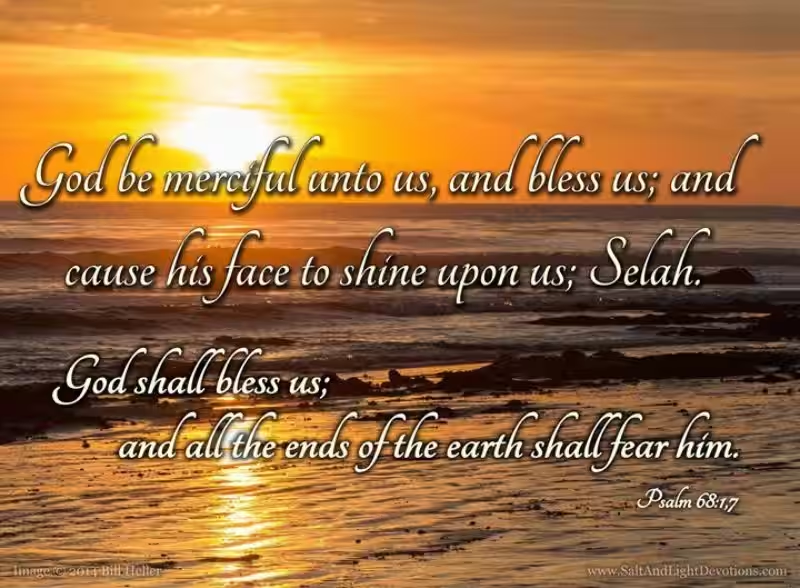
Imagine a world filled with the melodies of lyres, harps, and lutes. This was the world of the Israelites, where music played a vital role in daily life, religious ceremonies, and even warfare. The Bible mentions various musical instruments, including neginoth, which were used in both sacred and secular settings. The term "neginoth" appears in the Book of Psalms, where it is often associated with the "instruments of music" (Psalm 4, 6, 33, 43, 57, 67, 76, 92, 108, 144, 150). These psalms describe the use of neginoth in praising God, expressing joy, and conveying deep emotions.
Deciphering the Mystery of Neginoth: Instruments and Interpretation
While the precise instruments associated with neginoth remain a subject of debate among scholars, some believe it may have referred to a specific type of lyre or harp, perhaps even a particular type of musical style. The use of the plural form "neginoth" suggests a variety of instruments, possibly even an ensemble of musicians. The Hebrew word "negin" is closely related to the verb "nagan," which means "to play" or "to strike." This connection further strengthens the association of neginoth with stringed instruments.
Neginoth in the Psalms: A Tapestry of Musical Expression
The Psalms offer a rich tapestry of musical expression, and the presence of neginoth adds depth and complexity to their meaning. For example, Psalm 33:3 describes God as "the maker of music," while Psalm 150 calls for all creation to praise God with music. The musical instruments mentioned in these psalms, including neginoth, served as a means of expressing praise, adoration, and even lament. They provided a way for the Israelites to connect with God on a deeply personal and emotional level.
While the specific sounds of neginoth may have been lost to time, their presence in the Bible provides a glimpse into the musical world of ancient Israel. Their use in worship and their association with praise and joy continue to resonate with us today, reminding us of the power of music to connect us to something greater than ourselves. The next time you hear a beautiful melody or sing a heartfelt hymn, remember the echoes of neginoth, and the ancient Israelites who used music to express their faith, joy, and sorrow. The enduring legacy of neginoth serves as a reminder of the timeless power of music to transcend cultures and connect us to the divine.