The Elephant in the Bible: A Tale of Triumph and Tragedy
The Elephant in the Bible: A Tale of Triumph and Tragedy
While the elephant may not be a creature explicitly mentioned in the Bible, its presence looms large in the tapestry of biblical history. Though not directly referenced in the canonical texts, the elephant's influence is felt in the apocryphal books, specifically in the book of 1 Maccabees. This fascinating story offers a glimpse into the world of ancient Judea and the power dynamics that shaped its destiny.
The story unfolds during the Seleucid period, a time when the Hellenistic empire exerted a powerful influence over the region. The Maccabean revolt, a fierce struggle for religious and cultural freedom, emerges as the central narrative. Within this turbulent backdrop, the elephant takes center stage, symbolizing the might of the Seleucid king Antiochus IV Epiphanes.
Antiochus IV Epiphanes, the reigning Seleucid king, was a formidable figure. Known for his ruthlessness and ambition, he sought to impose Greek culture and religion upon the Jews. His actions, including the desecration of the temple in Jerusalem, ignited the Maccabean revolt.
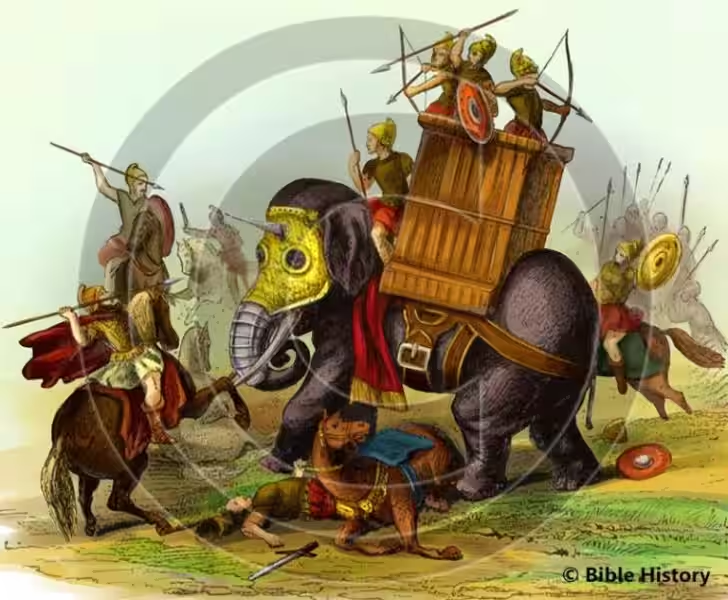
One pivotal moment in the conflict involves Antiochus's elephant. This majestic beast, a symbol of royal power and authority, was instrumental in the king's military campaigns. However, the elephant's role in the story takes a surprising turn.
The Elephant Turns: A Twist of Fate
During a battle against the Maccabees, Antiochus's elephant, which had been trained for war, unexpectedly turned on its master. This dramatic event serves as a powerful metaphor, symbolizing the shifting tides of power and the unexpected twists of fate.
The elephant's sudden betrayal is attributed to divine intervention. The Maccabees, guided by their unwavering faith, believed God was on their side, orchestrating this remarkable turn of events. The elephant's actions, viewed as a divine act, bolstered the Maccabees' morale and weakened Antiochus's authority.
The Elephant’s Legacy: A Symbol of Power and Faith
The elephant's story in 1 Maccabees transcends the confines of a historical account. It embodies a larger message about the power of faith and the fragility of human power. The elephant, despite its imposing strength, becomes a symbol of vulnerability and the unpredictable nature of fate.
This story offers a powerful lesson: even the most formidable entities can be brought down by the forces of faith and resilience. The elephant's betrayal serves as a reminder that true power lies not in brute force, but in unwavering belief and the unwavering commitment to one's convictions.
In the grand narrative of the Bible, the elephant's presence may be fleeting, but its impact resonates through the ages. Its symbolic significance serves as a reminder that even in the face of overwhelming odds, faith and determination can triumph over seemingly insurmountable challenges. The elephant's story, while not explicitly mentioned in the canon, is a testament to the enduring power of faith and the fragility of human power.