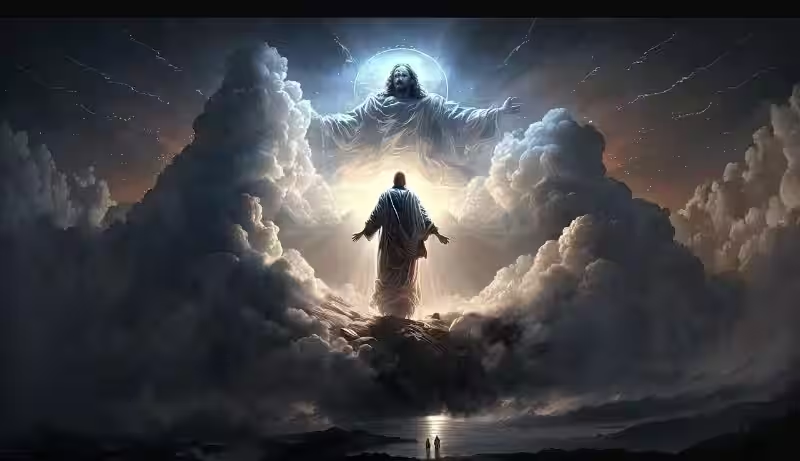
Eloi: A Cry of Despair and Faith in the Face of Suffering
Eloi: A Cry of Despair and Faith in the Face of Suffering
The phrase “Eloi, Eloi, lama sabachthani?”, uttered by Jesus during His crucifixion, is one of the most haunting and powerful expressions in the New Testament. Found in Mark 15:34, it translates to: “My God, my God, why have you forsaken me?” These words reflect deep human anguish, yet they also hold profound theological meaning that has resonated for centuries.
A common question that arises is: What does “Eloi” mean in Hebrew? To clarify, “Eloi” is not Hebrew—it is Aramaic, the everyday language spoken by Jesus and many in first-century Judea. In Hebrew, the phrase “my God” is “Eli” (אֵלִי). The two words—Eli and Eloi—share the same root (El, meaning "God") and both mean “my God”, but they belong to different Semitic languages.
The Gospel of Mark, written primarily for a Roman audience, preserves the Aramaic expression "Eloi", while Matthew 27:46 uses the Hebrew version "Eli". The difference is linguistic rather than theological. Both expressions carry the same plea: a cry to God in a moment of utter abandonment.
Jesus’ Cry on the Cross: Human Agony and Messianic Fulfillment
By quoting “Eloi, Eloi, lama sabachthani?”, Jesus was referencing Psalm 22, a well-known Hebrew psalm that begins with the same words: “My God, my God, why have you forsaken me?” (Psalm 22:1). Far from being a cry of hopelessness, this reference to the psalm reveals a deeper purpose.
Psalm 22 begins in despair but ends in hope and vindication. By invoking this psalm, Jesus not only expresses the real emotional and physical suffering of the cross, but also points to the fulfillment of Scripture, highlighting His role as the suffering Messiah.
Interpreting the Cry: Abandonment or Deeper Communion?
The theological interpretation of this cry has varied among scholars and believers:
Some see it as a literal expression of abandonment, reflecting Jesus’ full participation in human suffering, including the experience of spiritual distance.
Others view it symbolically, representing the burden of sin that Jesus bore on behalf of humanity, momentarily separating Him from the Father.
Still others emphasize its role in fulfilling messianic prophecy and see it as a demonstration of deep trust in God, even in darkness.
Regardless of interpretation, the moment captures the tension between despair and faith, pain and purpose, that defines the crucifixion.
A Universal Cry of the Soul
Eloi meaning in hebrew? While often associated with Hebrew, “Eloi” is actually Aramaic, the everyday language spoken by Jesus. It translates to “my God,” just like the Hebrew word “Eli” (אֵלִי).
Though spoken over 2,000 years ago, the cry of “Eloi” continues to speak to the human condition. In times of grief, isolation, or spiritual dryness, believers across generations have found solace in knowing that even Jesus experienced a sense of divine silence.
The phrase reminds us that faith does not eliminate suffering, but it gives suffering meaning. It shows that lament is not a sign of weak faith, but an honest expression of the soul reaching toward God in the darkest hour.
The “Eloi” spoken by Jesus on the cross is more than a historical detail—it is a window into the heart of divine suffering, a fulfillment of ancient prophecy, and a message of solidarity with all who feel abandoned or alone. Though the meaning of "Eloi" in Hebrew is often misunderstood, it offers a gateway to explore the richness of Jesus' words and the power of the cross.
In that cry, we hear the voice of humanity—but also the echo of redemption.
Frequently Asked Questions (FAQs) about “Eloi” and Its Meaning
What is the meaning of “Eloi” in Hebrew?
While often associated with Hebrew, “Eloi” is actually Aramaic, the everyday language spoken by Jesus. It translates to “my God,” just like the Hebrew word “Eli” (אֵלִי). Both words share Semitic roots and express a deeply personal connection to God.
Why did Jesus say “Eloi” instead of “Eli”?
Jesus spoke Aramaic, so his cry on the cross—“Eloi, Eloi, lama sabachthani?”—reflects his native tongue. The Gospel of Mark preserves this authentic expression, emphasizing the historical and linguistic context of Jesus’ final moments. Meanwhile, Matthew uses the Hebrew form “Eli,” likely tailored for a more Jewish audience.
Where does the phrase “Eloi, Eloi, lama sabachthani?” appear in the Bible?
This phrase appears in Mark 15:34, and a slightly different version in Matthew 27:46. It is a direct quotation from Psalm 22:1, linking Jesus’ suffering on the cross with the prophetic psalm that begins in despair but ends in trust and hope.
Was Jesus expressing despair or faith?
Both interpretations hold weight. On one hand, the cry reveals Jesus’ deep anguish and sense of abandonment. On the other, it is a reference to Psalm 22, which moves from suffering to ultimate deliverance—indicating that Jesus’ cry was not a loss of faith but a profound act of trust amid suffering.
Does “Eloi” carry special meaning for Christians today?
Yes. For many believers, “Eloi” represents the human experience of suffering and feeling distant from God, yet still reaching out in faith. It reminds us that Jesus shared fully in our pain and that even in moments of deep despair, we are never truly alone.