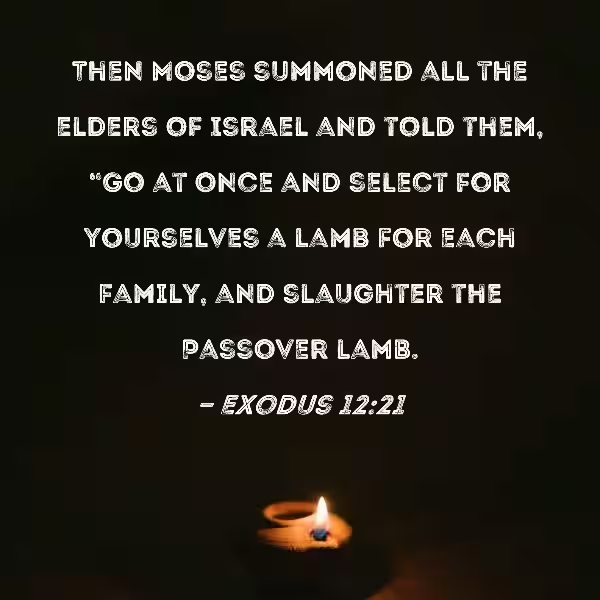
The Passover, a central event in Jewish history and faith, commemorates the liberation of the Israelites from Egyptian slavery. It's a time of reflection, remembrance, and celebration, with rich symbolism woven into every aspect of the observance. One of the most poignant elements is the commandment to apply the blood of a lamb to the doorposts, as outlined in Exodus 12:21-23. This seemingly simple act holds profound meaning, revealing a deeper spiritual significance beyond the surface.
Imagine the Israelites, huddled in their homes, fear gripping their hearts as the tenth plague descends upon Egypt. Death, personified as the Angel of Death, stalks the land, seeking out the firstborn in every household. Yet, amidst the fear and uncertainty, there is a beacon of hope: Exodus 12:21-23 instructs the people to take a lamb, slaughter it, and apply its blood to the doorposts and lintel of their homes. This act becomes a powerful symbol of protection. The blood, a potent reminder of the sacrifice made, serves as a mark, a shield, a sign that the Angel of Death is to "pass over� that dwelling.
The blood of the lamb wasn't merely a physical barrier; it was a testament to the covenant established between God and His people. It symbolized their faith in the promise of deliverance, a belief that transcended the fear and uncertainty of the moment. It served as a visual reminder of God's faithfulness and the power of His protection.
A Window into the Future
The Passover, with its unique rituals, is not merely a historical commemoration; it also offers a glimpse into the future, serving as a precursor to the ultimate sacrifice. The blood of the lamb, a symbol of redemption from slavery, foreshadows the sacrifice of Jesus Christ, the Lamb of God, who would shed His blood to redeem humankind from the slavery of sin.
This connection is not lost on the Jewish people who, centuries later, see the Passover as a reflection of the hope for a redeemed future. They see the lamb's blood as a symbol of sacrifice, pointing towards theultimate Lamb, whose sacrifice would bring true freedom and reconciliation with God.
A Time for Reflection
The Passover is not just a meal; it's a journey into a deeper understanding of God's faithfulness and His unwavering love for His people. The rituals, from the Seder plate to the recitation of the Haggadah, are a testament to the power of remembrance and the enduring legacy of the Exodus. The act of applying the blood of the lamb, as outlined in Exodus 12:21-23, transcends the literal; it invites us to contemplate the depth of God's love and the power of sacrifice in our own lives.
The Passover is a time for personal reflection, a chance to examine our own journey and to recognize the liberating grace of God that allows us to break free from the shackles of sin and live in the freedom that only He can offer. It's a reminder that we are not alone in our struggles and that God's love and protection are always available to us.