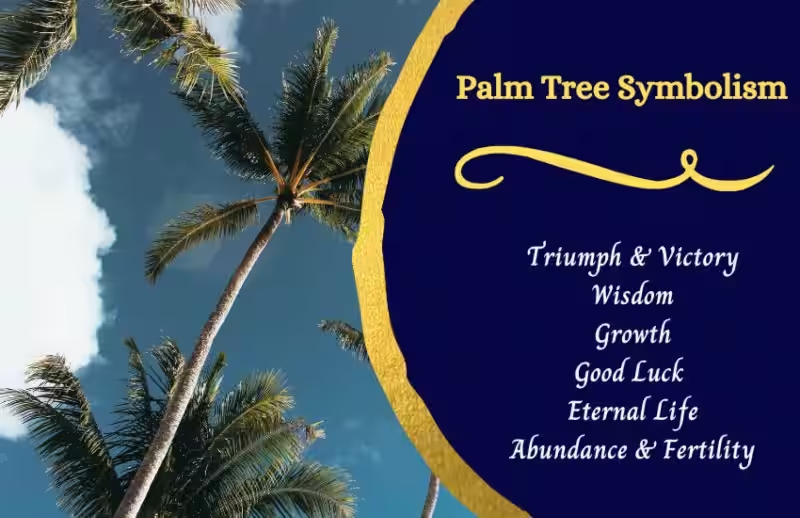
The palm tree, with its graceful, swaying fronds and enduring presence, has captivated people for centuries. Throughout history, it has been a symbol of various concepts, from victory and peace to resilience and prosperity. This enduring symbolism stems from its unique characteristics and its prominent role in different cultures and religions.
In ancient Rome, palm branches were awarded to victorious athletes during the Olympic Games. This tradition reflected the palm tree's association with triumph and victory. The palm's ability to thrive in harsh environments, like the arid deserts, further cemented its symbolism of overcoming adversity. This connection to resilience and triumph is also reflected in the Bible, where palm branches were used to welcome Jesus into Jerusalem, signifying his victory over death and sin.
A Symbol of Peace and Hospitality
The palm tree is often associated with peace and hospitality. In Islam, the date palm is considered a sacred tree. It is believed to be one of the first trees created by God and is often referred to as the "tree of life." The palm's presence symbolizes peace, tranquility, and abundance, making it a welcoming sight in many Muslim communities. Its branches offer shade and shelter, while its fruit provides nourishment, fostering a sense of community and shared resources.
A Source of Life and Abundance
The palm tree has long been recognized as a symbol of life and abundance. Its fruit, particularly the date palm, is a vital source of food and sustenance in many regions. The coconuts from other species of palm trees provide nutrition, hydration, and building materials. This connection to life-giving sustenance further reinforces the palm tree's association with abundance and prosperity.
The palm tree holds a significant place in many cultures around the world. Here are some examples:
Ancient Egypt: Palm trees were associated with fertility and rebirth. They were often depicted in hieroglyphics and were believed to provide protection and guidance.
Mesoamerica: The Mayan civilization revered the palm tree as a symbol of life and creation. They used its leaves to create baskets, mats, and other essential items.
India: In Hindu mythology, the coconut palm is associated with the goddess Lakshmi, who embodies wealth and prosperity.
The Enduring Legacy of the Palm Tree
The palm tree's symbolism has transcended time and cultures. From its association with victory and peace to its representation of life and abundance, the palm tree continues to hold a powerful and meaningful place in human history and imagination. Its enduring presence reminds us of the resilience of nature, the importance of community, and the pursuit of prosperity, reminding us that even in the face of adversity, life can flourish and triumph.