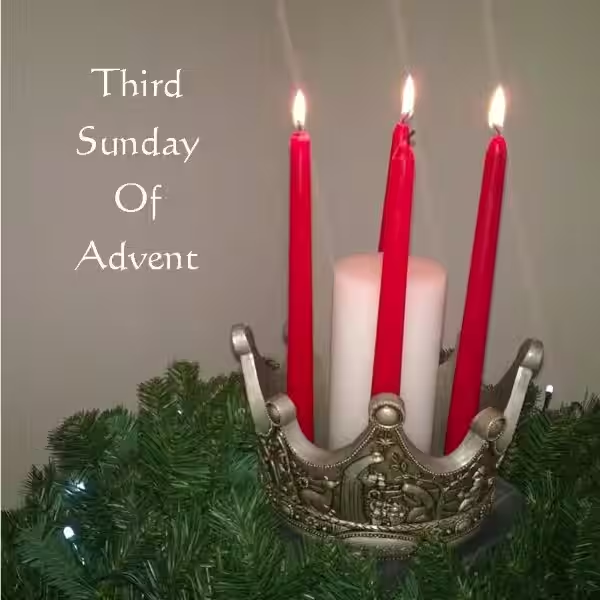
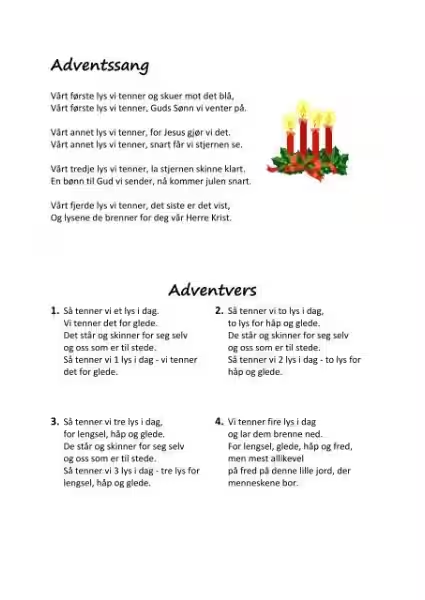
The third Sunday of Advent, also known as Gaudete Sunday, holds a special place in the liturgical calendar. Falling between December 11th and 17th, it marks a significant turning point in the Advent season. Unlike the more penitential tone of the preceding Sundays, Gaudete Sunday bursts forth with a vibrant proclamation of joy. The name itself, derived from the Latin word "Gaudete" (Rejoice!), reflects this shift in mood. The introit for the Mass on this day begins with this powerful command: "Rejoice in the Lord always; again I say, rejoice." This joyous call, echoing Philippians 4:4-6 and Psalm 85:1, sets the stage for a celebration of hope and anticipation.
Historically, Advent began as a 40-day fast, often called Saint Martin's Lent. Over time, this period was shortened to four weeks. Similar to Laetare Sunday in Lent, Gaudete Sunday provides a welcome respite, a midpoint break injecting a sense of jubilant expectation into the otherwise reflective preparation for Christmas. This midway joy symbolizes the growing closeness of Christ’s coming, both his first arrival at Christmas and his glorious second coming. It's a reminder that while we prepare, we also celebrate the nearness of God’s grace.
The Liturgical Significance of Gaudete Sunday
Rose-Colored Vestments and Candles
The liturgical expressions of Gaudete Sunday are as striking as its message. Churches traditionally use rose-colored vestments instead of the usual violet (or deep blue in some traditions). This vibrant hue symbolizes the blossoming joy approaching the Christmas celebration. The shift in color is not merely an aesthetic choice; it's a powerful visual representation of the spiritual shift happening within the Advent season. This use of rose, previously informal in some Anglican traditions, was formally recognized in the Church of England's Common Worship liturgical renewal.
Further emphasizing this joyous shift, many churches incorporate a rose-colored candle into their Advent wreaths. This candle is lit alongside the previously lit violet/blue candles, creating a striking visual reminder of the unique blend of hope and celebration intrinsic to Gaudete Sunday. The symbolism is clear: amidst the preparation and reflection, joy is now centrally expressed.
The liturgical readings chosen for Gaudete Sunday consistently emphasize rejoicing in the Lord and the Christian virtue of joy. These readings often feature passages about John the Baptist and his crucial role in preparing the way for Christ. The readings highlight the important theological distinction between joy and happiness. Happiness, while a desirable human goal (especially the contemplation of God), is different from the joy that stems from Christian love (charity). This Advent joy is an anticipation and hope fuelled by faith, a profound sense of expectation for Christ's arrival.
Pope Francis, in a 2014 homily, beautifully captured the essence of Gaudete Sunday. He encouraged focusing on life's blessings rather than being consumed by anxieties about unmet Christmas preparations. This message aligns perfectly with the spirit of the day: to find joy in the present moment, in the anticipation of Christ's coming, and in the blessings already bestowed upon us.
Living Out the Joy of Gaudete Sunday
Beyond Liturgical Observances
The joy experienced on Gaudete Sunday shouldn't be confined to the church walls. It's a call to action, an invitation to spread joy throughout our lives and communities. This means actively seeking out opportunities to share the love and hope that Christ brings. Consider small acts of kindness, volunteering your time, or simply offering a listening ear to someone in need.
Gaudete Sunday encourages us to reflect on how we can practically express our joy. It’s not just about feeling good; it's about acting on that feeling, translating inner joy into outward actions. This could involve sharing a meal, offering a helping hand, or simply sending a kind message to a friend. The possibilities are endless, limited only by our willingness to share the joy we find in Christ.
The message of Gaudete Sunday resonates deeply in our daily lives. In the midst of busy preparations, stressful schedules, and the often-overwhelming commercialism of the Christmas season, remember the true meaning of Advent. Focus on the spiritual preparation, the deepening of your faith, and the joy of awaiting Christ's birth. Create space for prayer, reflection, and acts of charity to truly embody the spirit of Gaudete Sunday.
Consider incorporating simple practices into your daily routine, like listening to uplifting music, reading inspiring scriptures, or spending time in nature. These small acts can help cultivate a sense of inner peace and joy, allowing you to better share that joy with others. Remember, the essence of Gaudete Sunday is to let the joy of Christ's coming shine brightly in our lives and in the lives of those around us. It is a call to rejoice, not just on one Sunday, but throughout the Advent season and beyond.
Vanlige spørsmål og svar om 3. advent (Gaudete søndag)
Hva er Gaudete søndag?
Den tredje søndagen i advent.
Hvorfor kalles den Gaudete søndag?
Navnet kommer fra det latinske ordet "Gaudete" som betyr "Gled dere".
Hva er spesielt med Gaudete søndag?
Det er en mer glad og optimistisk dag i adventstiden, i motsetning til den mer ettertenksomme og botferdige tonen ellers.
Hvorfor er det rosefargede klær og lys?
Rosefargen symboliserer den voksende gleden over Jesu forestående ankomst.
Hva er de teologiske aspektene ved Gaudete søndag?
Dagen understreker den kristne dyd av glede, rotfestet i tro og kjærlighet, som et svar på Jesu forestående ankomst og løftet om frelse. Det skilles mellom glede (et resultat av kristen kjærlighet) og lykke (det ultimate målet for mennesket).