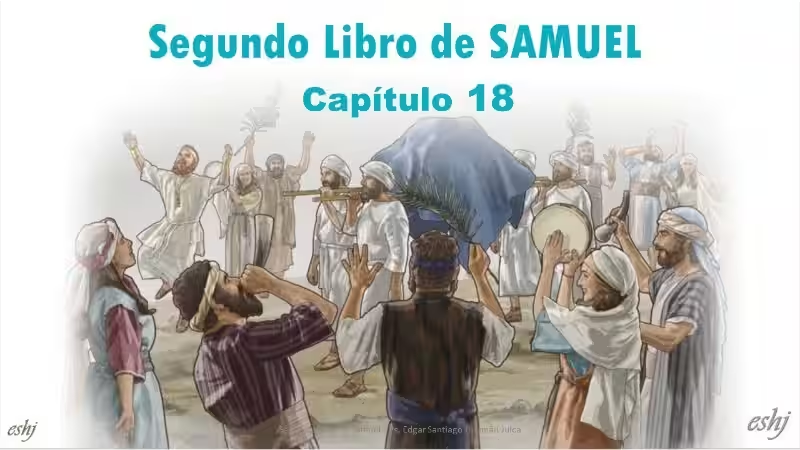
The Weight of Victory: A Deeper Look at 2 Samuel 18:19-33
The Weight of Victory: A Deeper Look at 2 Samuel 18:19-33
The victory of David's forces over Absalom's rebellion in 2 Samuel 18:19-33 was a watershed moment in the history of Israel. But beneath the surface of this triumph lay a profound sorrow, a tragic reminder of the human cost of conflict.
The account begins with the messenger rushing to David with the news of Absalom's death. He delivers the message with a mix of excitement and caution: "May the Lord your God be with you!" (2 Samuel 18:28). This ambivalent tone reflects the complexity of the situation. While David had been spared the devastation of a full-blown uprising, the loss of his son was a crushing blow.
David's reaction to the news is raw and emotional. He cries out, "My son Absalom! My son, my son Absalom! Would I had died instead of you, Absalom, my son, my son!" (2 Samuel 18:33). His words reveal a depth of love and grief that transcends the political implications of the rebellion. He mourns the loss of his son, not as a king who had defeated his enemy, but as a father who had lost a part of himself.
The weight of David's grief is further emphasized by his actions. He refuses to let anyone tell him the news again. He spends the rest of the day in mourning, deeply affected by the tragedy. This is not the reaction of a cold-hearted king who simply rejoiced in the victory of his army. It is the reaction of a father in deep anguish, a man wrestling with the pain of loss.
This passage offers several powerful lessons for us:
The human cost of conflict: While victory may be celebrated, war always leaves behind a trail of sorrow and loss.
The complexity of human emotions: Even in times of political turmoil, deeply personal emotions like love and grief are always present.
The importance of empathy: David's grief reminds us to acknowledge the pain of others, even our enemies, and to extend compassion beyond the confines of our own circle.
A Universal Story: Beyond the Battlefields of Ancient Israel
The story of David and Absalom is more than just a historical account. It resonates across cultures and generations because it speaks to the universal human experience of loss and the enduring power of love. In the face of victory, David reminds us that true victory lies not in crushing our enemies, but in embracing our humanity, even when it means acknowledging the pain of loss.
This passage encourages us to look beyond the surface of events and to see the human stories that lie beneath. It challenges us to consider the emotional complexities of war, to recognize the pain of those who are caught in the crossfire, and to remember that love and compassion are the true foundations of lasting peace.