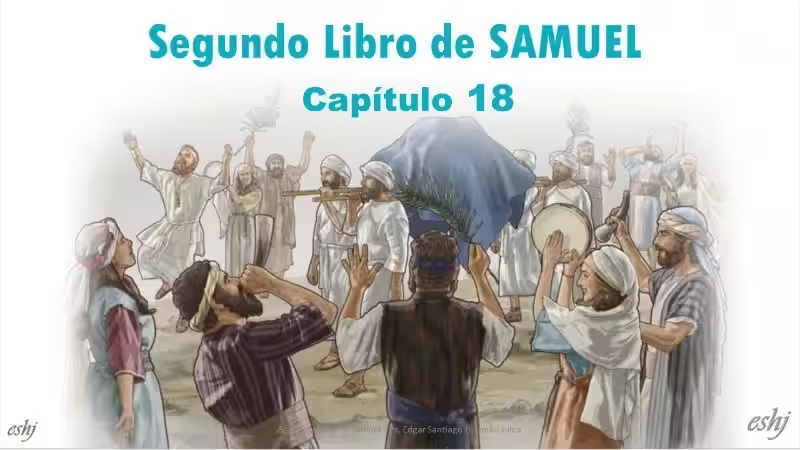
The battlefield is a place of intense emotions. Fear, anger, and desperation clash in a symphony of chaos. In 2 Samuel 18 ESV, we encounter a day of reckoning, where years of tension and conflict reach a climax. This chapter recounts the final battle between David's forces and those of his rebellious son, Absalom.
Here, the reader is immersed in the raw reality of war. We witness the strategic maneuvering of armies, the desperate pleas of soldiers, and the heart-wrenching consequences of battle. The chapter opens with David's strategic deployment, where he entrusts his generals with the responsibility of leading his army against Absalom. David himself remains behind, not wanting to witness the bloodshed firsthand. This demonstrates his deep love for his son, even in the face of betrayal.
The battle unfolds with a devastating intensity. The forces of Absalom, confident in their numbers, clash with David's army. However, the tide quickly turns as David's experienced soldiers prove to be more than a match for Absalom's untrained troops.
As the battle reaches its peak, the focus shifts to Absalom. He is portrayed as a charismatic leader, but one who is ultimately outmatched by David's seasoned generals. His death, a tragic consequence of his rebellion, marks a turning point in the narrative. It highlights the consequences of choosing pride over loyalty, and the devastating impact that rebellion can have on individuals and nations.
Absalom's Death: A Symbol of Loss
The news of Absalom's death reaches David, who is devastated. He expresses his grief in a powerful lament: "O my son Absalom, my son, my son Absalom! Would I had died instead of you, O Absalom, my son, my son!" (2 Samuel 18:33). This poignant outcry reveals the depth of David's love for his son, a love that transcends the pain of betrayal and the consequences of rebellion.
David's lament is a reminder that even in the face of adversity, the bonds of family and love often remain. It is a humanizing moment that reveals the vulnerability of a king and the profound grief that can accompany loss. This moment serves as a stark contrast to the brutal realities of war, reminding the reader that behind the clash of swords and the roar of battle, there are human hearts that are broken and lives that are lost.
The chapter concludes with the victorious return of Joab and his army. David, still consumed by grief, refuses to celebrate the victory. Instead, he is consumed by the loss of his son, highlighting a profound sense of sorrow that overshadows the triumph of the day.
The aftermath of the battle is a stark reminder of the lasting impact of war. It leaves families torn apart, kingdoms weakened, and lives forever changed. The chapter concludes with a somber tone, emphasizing the human cost of conflict and the lingering pain that accompanies even the most decisive of victories.