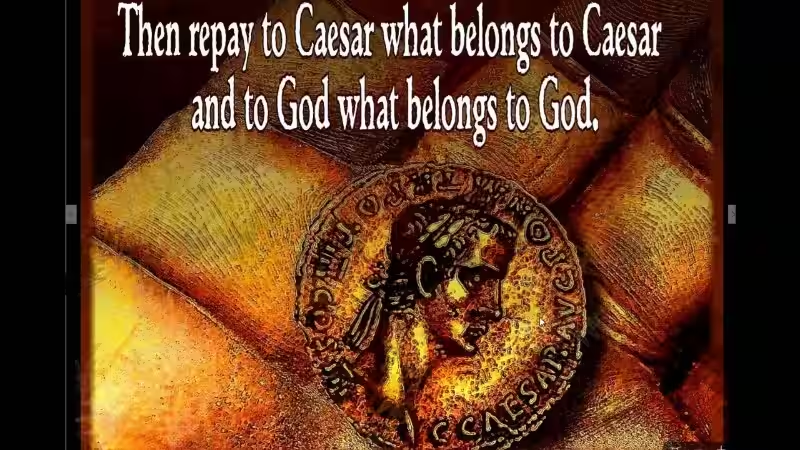
The denarion, a silver coin that played a pivotal role in the Roman world, was not just a form of currency but a symbol of power, faith, and social status. Its legacy continues to resonate in both historical and biblical narratives.
The denarion was introduced in the 3rd century BC during the Roman Republic. It was initially worth ten asses, another Roman coin, and its name derives from the Latin word "denarius," meaning "containing ten." The denarion soon became the dominant coin in the Roman economy, replacing older forms of currency and becoming a symbol of Roman power and influence. Its widespread circulation facilitated trade and commerce throughout the vast Roman empire.
The denarion holds a significant place in the Gospels, appearing in several key stories. One such story, found in Matthew 22:19-21, highlights the denarion's connection to taxation. When asked about whether to pay taxes to Caesar, Jesus poses a question to his inquisitors: "Show me the coin used for the tax." This seemingly simple act, the presentation of a denarion, challenges the authority of the Roman state, bringing into question the nature of allegiance and the obligation to pay taxes.
Another notable instance of the denarion in the Gospels appears in the parable of the Good Samaritan (Luke 10:25-37). The Samaritan, who epitomizes compassion and kindness, pays the innkeeper two denarii to care for the injured traveler. This act of generosity demonstrates the denarion's capacity to symbolize not only financial value but also the value of human life and the importance of selfless action.
The denarion's significance extends beyond its monetary value. It represents the power and authority of the Roman Empire, a force that dominated the ancient world. The denarion served as a reminder of the Roman presence in the lives of ordinary people. Its image, often featuring the emperor's likeness, reinforced the imperial authority and instilled a sense of awe and respect.
Furthermore, the denarion played a crucial role in shaping the social hierarchy of the Roman world. The value of a man's labor was measured in denarii, and its possession signified economic stability and social standing. The denarion was a symbol of wealth and power, often used to reward loyal servants, purchase goods and services, and pay taxes.
The Denarion’s Legacy
The denarion's legacy lives on in the modern world. Its image appears on coins and banknotes, serving as a reminder of the Roman Empire's enduring legacy. Moreover, its influence is evident in the way we think about money and its role in society. The denarion continues to be a topic of discussion and study, offering insights into the social, economic, and religious dynamics of the Roman world.
The denarion, a small coin with a profound impact, serves as a window into the past, offering glimpses into the lives and beliefs of people who lived centuries ago. Its story continues to inspire and inform, reminding us of the enduring power of money and the importance of its impact on our world.